It’s become abundantly clear that many city officials either do not understand or are unwilling to adhere to state law and the city’s own charter
By STEVE MARTIN | Special to the Gazette
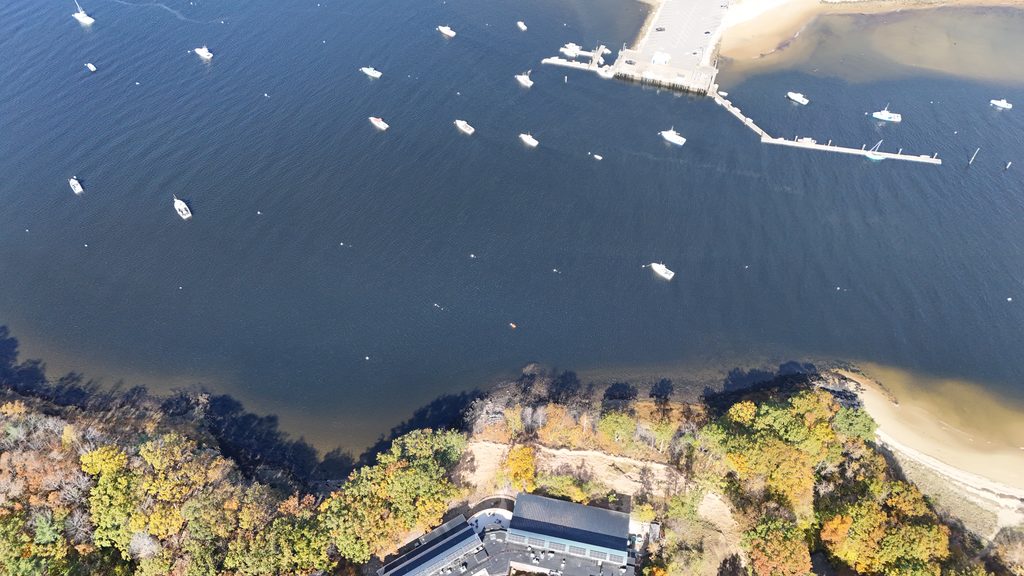
The role of the Biddeford harbormaster has generated considerable controversy with respect to the Saco River pier that the University of New England (UNE) wants to build for its Marine Science program.
The controversy centers around the location that UNE prefers and its contrast to the site harbormasters have deemed as more appropriate.
More recently, the controversy has been amplified by conversation about what role Biddeford’s harbormaster plays in approving construction of UNE’s pier.
Before demonstrating how the city has made a mistake that could land us in court, an examination of the historical background of harbormasters is in order.
The title of harbormaster can be traced back centuries to medieval England, continuing to colonial America, right up to today across the entire United States.
Because the job requires specialized marine skills, emergency authority and impartial enforcement of navigation rules, governments have historically relied on appointments rather than popular elections.
The origins and history of harbormasters
American harbor governance grew out of the English system, where the King’s or Queen’s Harbour Master was appointed by the Crown or Admiralty starting in medieval times. These officials held sweeping authority over royal dockyards and local waters to keep shipping lanes clear and secure.
The specific title “harbor master” became common in English records around the 1760s, though earlier colonial towns sometimes split these duties among appointed water bailiffs, port wardens, or wharfingers.
As new American ports opened in the 18th and 19th centuries, local governments continued the practice. As an example, when San Francisco established its harbor master office during the 1849 Gold Rush, the local legislative assembly and military governor directly appointed a ship captain to bring order to the crowded anchorage.
Managing moorings, tides, vessel traffic and storm safety requires experienced mariners rather than career politicians.
Harbor masters use impartial enforcement. They often have to settle disputes over prime mooring spots, collect fees and enforce local boating laws.
Keeping the office appointed helps prevent local factions from voting out an official simply for enforcing unpopular rules. Today, most harbormasters are appointed by a local government body town selectboard, city manager, mayor or port authority.
Our state laws also specify that municipal officers are responsible for appointing a harbor master and is subject to the duties assigned by them and nobody else. Furthermore, it makes clear that the authority to discipline a harbor master is also their responsibility. Title 38: Waters and Navigation, Subchapter 1: Harbor Masters §1. Appointment; compensation
The municipal officers may establish the harbor master’s compensation and, for cause by them declared in writing, after due notice to the officer and hearing, if requested, remove the harbor master and appoint another one.
The following is from Biddeford’s city charter defining the duties of the harbormaster:
Section 7. The Harbor Master shall implement the river and harbor regulations emanating from the City Council, and such other duties as the City Council may prescribe.
Biddeford’s city charter language is essentially the same as the state law (Title 38, section 1).
Three city managers and Biddeford’s harbormaster



On May 22, 2024, former city manager Jim Bennett removed the city’s harbor master, Paul Lariviere — and the assistant harbor master, Randy Desmaris — from partaking in any of the review processes surrounding the proposed UNE pier.
Truc Dever, hired to succeed Jim Bennett, did not act on the order to remove the harbor masters from the review process and let stand their removal.
Two weeks ago, Biddeford Harbormaster Paul Lariviere sent an email to Cornell Knight, the interim city manager. Lariviere copied several others to that email, including the mayor and members of the city council.
In that email, Lariviere outlined his concerns of possible illegal actions by Knight.
Two days later, the interim city manager placed Lariviere on administrative suspension for alleged insubordination.
Biddeford’s city charter also spells out the role of the city manager:
Biddeford’s city manager is responsible for the day-to-day administration of the affairs of the city; implementing policies established by the mayor and the city council; reporting to and receive policy guidance from the mayor and the city council; and appointing, suspending, or removing — after consultation with the mayor and confirmation by the city council, department heads and subordinate officers.
It is my opinion that James Bennett, Truc Dever — and now Cornell Knight — have not followed state law or the city charter in their actions concerning the harbormaster.
Since both state law and the city’s charter assign the directing of the harbormaster to elected municipal officers only, the city manager cannot discipline the harbormaster. That is the sole responsibility of the city council.
A troubling pattern from City Hall

In suspending the harbormaster, interim city manager Cornell Knight, appears to have acted on his own.
There are no records in the public domain indicating he consulted with the mayor and council, getting their okay, as described in the city manager job description.
Whether there is actually a record will have to be disclosed because the harbormaster will be giving his permission to make the suspension process available to the public.
Bringing the matter to public light is the harbormaster’s prerogative to have a hearing and not keep it confidential and clouded in controversy.
The two city managers prior to Knight also failed to follow Maine law and the city charter by way of removing the harbormaster or failing to reverse that error.
By the same token, it can be alleged that the council has been remiss in not exerting its authority over the city managers and claiming its exclusive management of the harbormaster to include any disciplinary matters and involvement in the UNE pier review.
Understand moving of moorings
UNE is of the mistaken belief that the moorings impacted by their proposed pier can simply be moved and any costs involved would be covered by them.
Removal or placement of moorings is governed by the following — by which the harbor master has been faithfully following to the letter.
Under 38 M.R.S. § 3, may move a mooring only under very specific conditions: harbor congestion and navigation management; the obstruction of channels, piers, or wharves. (Note that the UNE pier has not yet been built)
The harbormaster can also remove or relocate a mooring if it is placed without a permit, lacks required identifying numbers, is occupied by an unapproved vessel. (Note that none of the moorings in question are in arrears or otherwise disqualified and subject to removal)
A harbor master can order a mooring replaced or removed if the ground tackle fails required inspections, poses a dragging hazard, or damages protected habitats like eelgrass beds.
State law also permits a harbor master to refuse mooring privileges or revoke assignments when annual registration fees or fines remain unpaid past municipal deadlines.
The harbor master has made it clear that none of the above provisions applies to any of the moorings that would be impacted by UNE’s pier and, therefore, he cannot move them.
To arbitrarily move a mooring without cause as stated in the charter could place the city in a precarious legal situation.
According to Biddeford’s city charter, the harbormaster is required to sign off on any proposed pier and wharf permit before any construction can begin.
The harbor master has previously signed off on a few docks and piers resulting in the issuance of a building permit.
The city of Biddeford’s online UNE Pier Proposal FAQ, the city code requires the harbormaster to sign off on the location at the conclusion of the local review process before a building permit can be issued.
The city’s ordinance specifically states that permission to construct any new wharf or pier within city limits shall not be granted without the approval of the harbormaster.
It should also be noted that the UNE pier is a private endeavor and does not directly provide for any public use of it, only for the marine science program.
The preferred site location offered by harbormasters, past and present, has no negative impact on the riparian rights of UNE and neighbors with the same rights, nor impacting existing moorings. A lesser environmental impact also results in utilizing the preferred site.
In all likelihood, UNE would have their pier by now if they had taken the advice of the harbor masters years ago.
The U.S. Supreme Court — as well as every state supreme court — has held that wording of laws and other official documents must be undertaken in a form that any laymen can understand it.
The harbor master is correct in his interpretations of state law and the charter by refusing to sign off on the building permit for the pier.
Everybody reading the state laws and charter provisions can only come to the same conclusion. Should any court action be forthcoming, judges and juries will, too.
ABOUT THE AUTHOR | Steve Martin of Biddeford is a retired police officer of the Biddeford Police Department
The views expressed here are solely those of the author and do not necessarily reflect those of the Biddeford Gazette, its staff, affiliates or sponsors. We encourage robust and diverse community conversations on topics related to the city of Biddeford. To submit your own letter or column, please CONTACT US






This is the most cogent, compelling legal argument I’ve seen to date. Thank you, Mr. Martin
What a great informative article. Great research and article Steve. Job well done.