The Biddeford City Council will consider lifting some of the development moratorium restrictions now preventing construction of a marine research pier on the Saco River
By RANDY SEAVER | Editor
The University of New England’s controversial marine research pier project may clear one of its last remaining hurdles during tomorrow’s Biddeford City Council meeting.
Currently, construction of the 180-foot concrete and steel pier has been delayed because the city enacted a temporary development moratorium on the university’s campus in January.
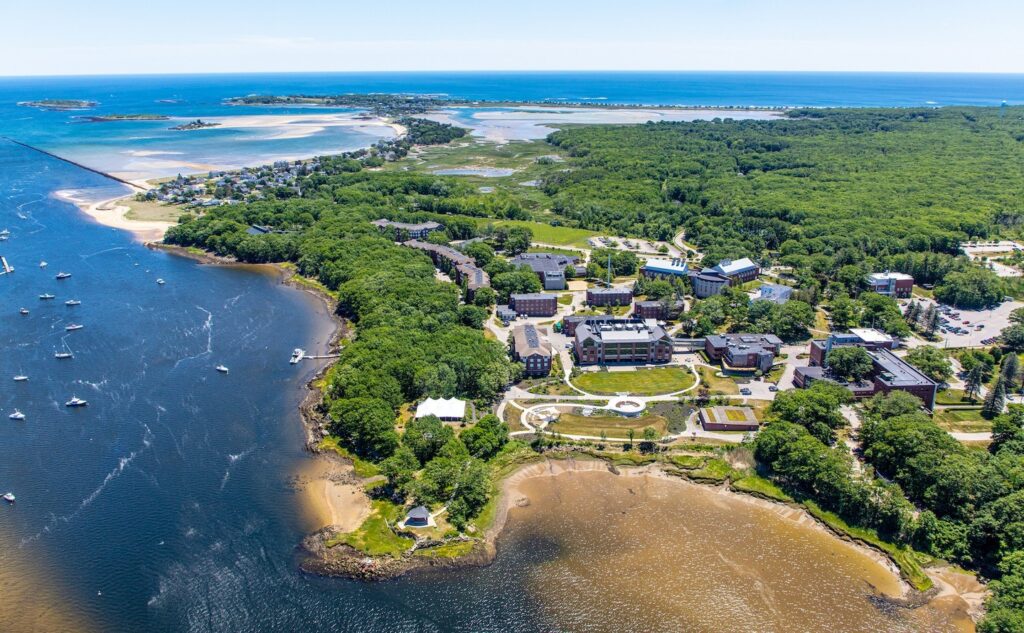
The council is scheduled to consider removing the pier and another pending project from the moratorium status because both projects were already approved by Biddeford’s Planning Board last year – before the moratorium was enacted by a new mayor and city council.
If the council chooses to remove the pier and the renovation of Decary Hall from the moratorium’s restrictions, the move could significantly ease growing tensions between the city and the university.
Mayor Liam LaFountain said the temporary moratorium was enacted to put a pause on rapid development at UNE’s Biddeford campus and give the city a bit of breathing room as it sought to clarify and update zoning requirements in the city’s Institutional Zone.
Upon enacting the moratorium, the city also created an Institutional Zone Review Committee (IZR) to review current zoning regulations and make recommendations to both the planning board and city council about future projects on the Biddeford campus
RELATED | Mayor proposes moratorium on UNE development
University leaders balked at the moratorium’s enactment, describing it as “a politically motivated move to impose retroactive zoning.”
The IZR Committee has met several times since February, conducting comprehensive and detailed reviews of existing zoning language that has not been updated for more than a quarter century.
LaFountain appointed UNE President James Hebert to serve on the IZR Committee along with City Councilors Patricia Boston (chair) and Marc Lessard; and three members of the public.
One of the most contested issues in the ongoing battle centers upon a so-called 250-foot shoreline buffer zone that was enacted by the Saco River Corridor Commission (SRCC) 25 years ago.
When the SRCC approved UNE’s pier proposal two years ago, they overlooked the buffer zone and its potential impacts on the project’s design, but said the project was already approved.
RELATED | SRCC admits UNE pier mistake
The city said they wanted legal clarification before issuing a building permit for the pier, and challenged the SRCC’s refusal to reconsider UNE’s application in York County Superior Court.
The Court ruled that the city’s complaint was not valid; and the SRCC again defended their previous decision during an August public hearing when they choose to grant UNE a two-year extension.
LaFountain told the Gazette on Sunday that the overall moratorium will remain in effect, even if the council chooses to exempt the marine research pier and the renovation of Decary Hall.
“The city’s push for accuracy and transparency on this issue was something citizens have repeatedly asked for,” LaFountain said. “But at this point – given that we were able to get an answer from the SRCC, review of the pier project has run its course and any further action would probably be only delaying the inevitable.
“Any further action would probably only be delaying the inevitable”
— Mayor Liam Lafountain
“It makes sense – from a pragmatic point of view — to bring this item before the council for their consideration,” LaFountain said.
In his memo to the city council, City Attorney Harry Center wrote that he is “reluctant to weigh in on the policy aspects of any decision” about removing the pier from the moratorium’s restrictions.
Center, however, opined that although the moratorium’s language is unambiguous and no permits should issue while that language is in effect — both projects were approved before the moratorium was imposed. Thus, a judge could “very likely” rule against the city, Center wrote.
“With the goal of transparency and SRCC review of its permits achieved, it would make sense to clarify that going forward the two projects are not subject to the moratorium,” Center wrote.
A university spokesperson said UNE appreciates that the city council will consider lifting the moratorium.
“We remain hopeful that this action, if approved, will represent a constructive step forward for these two important projects,’ said Sarah Delage, UNE’s associate vice president of communications.
STAY CONNECTED | SUBSCRIBE FOR FREE TODAY